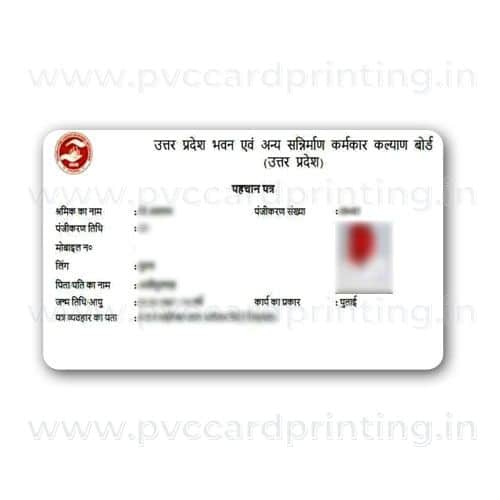
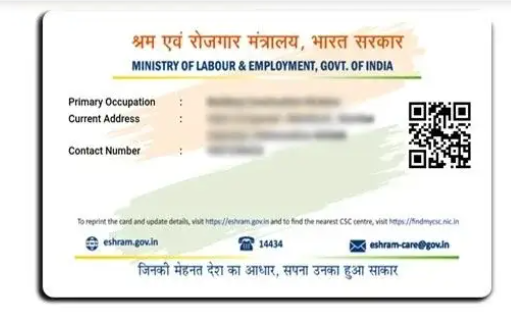
A Labour Card is a government-issued ID that formally registers unorganized sector workers—such as daily wage laborers, construction workers, street vendors, rickshaw pullers, domestic workers—granting them access to a range of social welfare and protection schemes. Under laws like the BOCW (Building & Other Construction Workers) Act and broader national initiatives, labour cards help formalize the informal workforce and connect them to critical benefits .
The card digitally links Aadhaar-based biometric data and acts as an official proof of employment and eligibility under various labour boards and welfare programs.
✅ Types & State Variations
🔹 Karnataka Model
In Karnataka, two main variants exist:
- Building Card: For workers employed under licensed contractors.
- Social Card: For those in non-construction sectors like farming, street vending, and other unorganized jobs .
Other states also issue tailored cards:
- Chhattisgarh, Telangana, Maharashtra, Jharkhand, and Uttar Pradesh run their own versions, linking to region-specific schemes like health insurance, housing, education, and legal aid.
📋 Who Qualifies—and What They Need
🧾 Eligibility Criteria
Typically, to qualify:
- Age between 18 & 60 years
- Must have worked at least 90 days in the past year in informal or construction sector jobs
- State residency and registration via local labour office
- Not employed in formal, organized sector jobs or paying income tax
📑 Required Documents
- Aadhaar Card, bank passbook, passport photo
- Proof of age (birth or school certificate), identity/residence documents (voter ID, ration card)
- Employment proof (job letter or contractor certification)
- If applicable, income or NOC documentation from employer or contractor
🎁 Key Benefits & What to Expect
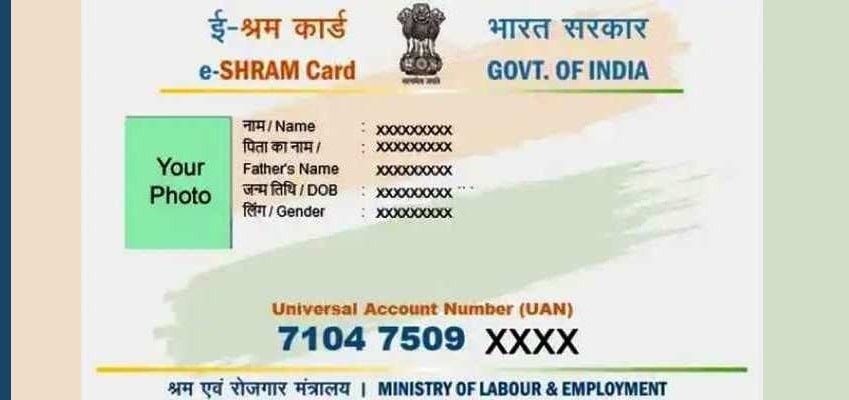
Labour card holders gain access to numerous welfare schemes:
- Health & Accident Insurance: Free or subsidized medical care, hospitalization, and coverage of ₹2 – 5 lakh depending on disability or death scenarios; sometimes aligned with Ayushman Bharat or state schemes
- Maternity Support: Lump‑sum payments (₹6,000 upwards) and benefits for first two children in some states
- Education Scholarships: Aid from primary through college levels—up to ₹40,000/year for older students in Karnataka schools or seats at residential institutions.
- Pension & Old‑age Benefits: Monthly pensions (around ₹1,000) for workers over 60 having contributed for the requisite years.
- Housing, Marriage & Funeral Grant Assistance: Subsidy for home construction/repair (₹2 lakh), marriage aid (₹50,000), and ₹10,000 funeral assistance .
- Tool Subsidy & Skill Training: Financial aid to purchase tools and free vocational training opportunities.
- Emergency Support: Quick‑disbursing cash for accidents or disasters; easy claim settlement in many schemes .
🛠️ How to Apply & Maintain Your Card
🌐 Online Process (via state portals/seva kendras)
- Visit your state’s official labour/welfare portal (e.g. Seva Sindhu for Karnataka).
- Complete Aadhaar-verified registration and upload documents.
- Pay a nominal registration fee (often Re 1–25), track your application.
- Once approved, download or receive the labour card from the state board.
🏢 Offline Process
- Visit the nearest labour office or Jan Seva Kendra.
- Submit a filled form along with photocopies of required documents.
- Receive acknowledgment and collect card upon approval.
🔄 Renewals and Tracking
- Cards usually valid for 1–5 years (varying by state). Renewal via the same portal with updated info.
- Track status using registration number, Aadhaar, or mobile number on the same portal or via SMS updates
🌱 Real Impact and Field Challenges
✅ Success Stories
In Karnataka alone, over 3 million workers across 91 sectors have benefited—with access to smart cards, housing, education, pensions, and more . Worker families have reported receiving medical aid, scholarships, maternity payments, and more—all thanks to the labour card framework.
🚧 Challenges
- Unawareness: Many, especially migrant or rural laborers, remain unaware of registration benefits
- Agent Fraud: In states like Maharashtra, agents illegally charge high fees (up to ₹1,000) despite official fee being just Re 1; multiple facilitation centers and enforcement steps are being rolled out to curb misuse
- Digital Barriers: Poor digital infrastructure and literacy create access hurdles—especially in remote areas.
💡 Conclusion: Why It Matters
A Labour Card isn’t just a piece of paper—it’s a bridge to dignity, security, and opportunity. For India’s vast unorganized workforce, it empowers individuals to access healthcare, education, housing, and social protection, reinforcing that they too are stakeholders in development.
By simplifying application processes, strengthening awareness, and ensuring transparency, state and central governments can make this scheme truly transformational—uplifting millions and bringing them into India’s inclusive growth story.