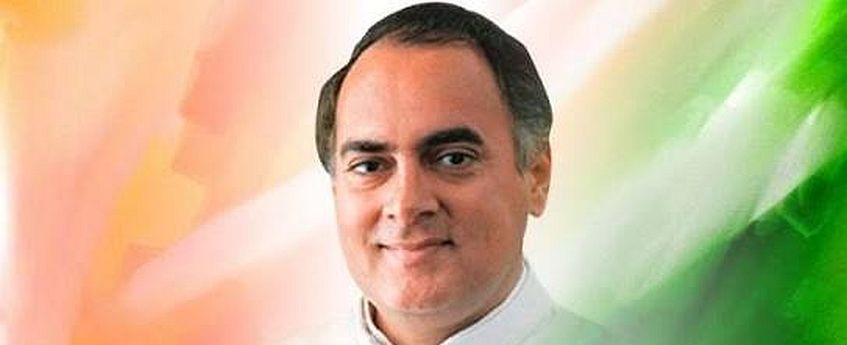
When Indira Gandhi was assassinated in October 1984, her elder son Rajiv Gandhi was thrust into leadership overnight at just 40 years old. With no prior political ambition—having worked as an airline pilot and stayed largely apolitical even while his brother Sanjay played a more public political role—Rajiv embraced the daunting mantle of prime minister and soon led Congress to a historic near‑unanimous win in the 1984 general elections
He was coined “the Computer Prime Minister” because of his pioneering efforts to integrate IT and telecom into governance, education, and national infrastructure. Under his leadership, C‑DOT and MTNL took shape, and telephone networks—including rural PCO booths—expanded dramatically. Sam Pitroda, his tech advisor, was central to these advances
🚀 Seeds of the Tech Revolution
Rajiv’s economic vision helped sow the seeds for India’s digital transformation. His policies dismantled several elements of the “license raj,” removed import barriers on technology goods, and allowed assembled motherboards into the domestic market—making computers accessible and affordable. His educational reforms included the 1986 National Policy on Education and the launch of Jawahar Navodaya Vidyalayas to bring quality education to rural youth
A Reddit contributor aptly summed up that his deregulation and tech‑friendly policies “resulted in industrial growth of more than 8 per cent on average for the period 1985–90,” adding that this period “led to the software industry as we know it today”
✌️ Political Reforms & National Challenges
While championing modernization, Rajiv also strengthened democratic structures. He passed the 52nd Constitutional Amendment (Anti‑Defection Law) in 1985 to combat political instability, lowered the voting age to 18, and supported local governance through Panchayati Raj via the 73rd and 74th Amendments—though most were officially enacted after his term .
On the foreign front, his government took bold actions: intervening in the Maldives in 1988 to thwart a coup (“Operation Cactus”) and initiating India’s military deployment to Sri Lanka (IPKF) in 1987—a controversial move that spurred conflict with the LTTE . He also signed the Indo‑Sri Lanka Accord in July 1987, seeking to de‑escalate ethnic tensions in Sri Lanka, but the policy backfired politically in Tamil Nadu .
⚠️ Legacy Tarnished: Bofors & Election Loss
Despite his popular appeal and vision, Rajiv’s tenure was marred by the Bofors scandal—allegations of kickbacks in a defence procurement deal. This tarnished his administration and led to a major electoral defeat for Congress in 1989. He resigned, but remained Congress President until late 1990
💥 Tragic End & Lasting Memory
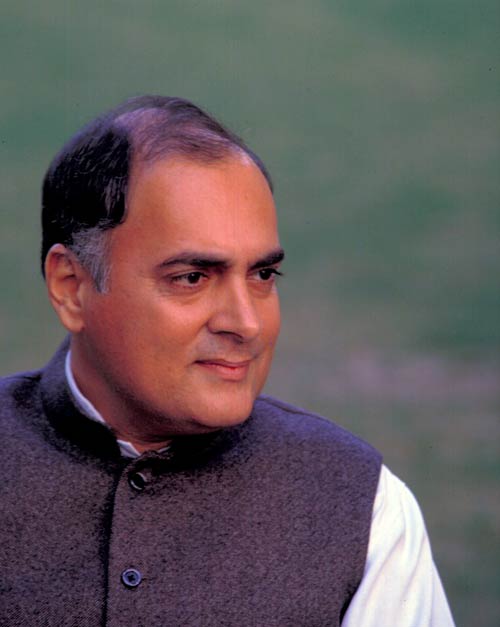
On May 21, 1991, Rajiv Gandhi was assassinated by a suicide bomber from the LTTE while campaigning in Sriperumbudur, Tamil Nadu. The shock halted India’s elections and shook the nation deeply
At least 16 others died in the blast. His assassination was a milestone in global terrorism—it marked one of the first high-profile suicide attacks by an extremist group
He is commemorated by:
- The Rajiv Gandhi Memorial at Sriperumbudur, inaugurated in 2003 at the assassination site
- The annual Sadbhavana Diwas (Harmony Day) on August 20, promoting national unity.
- Awards like the Rajiv Gandhi National Sadbhavana Award and National Quality Award, established posthumously to honor peace, integration, and excellence
🧩 Legacy: Dreamer, Reformer, and Martyr
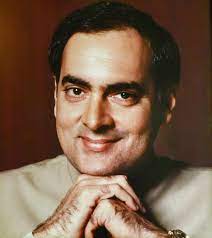
Though his tenure lasted only five years, Rajiv Gandhi laid foundational reforms that shaped modern India’s tech, education, telecom, and democratic infrastructure. His ambitious vision—technology plus liberalization—set India on a new path.
As one commentator described:
“Rajiv Gandhi left the imprint of modernity on this ancient country… he is widely and rightly acclaimed as the architect of digital India”
A generation later, the policies he initiated—digital push, rural education networks, deregulation, and decentralization—are still central to policy debates.
✍️ Final Reflection
Rajiv Gandhi’s leadership embodied energy, idealism, and youthful confidence. He offered a break from political inertia and envisioned an India that could leap globally through science, technology, and democratic reform. Yet his life ended prematurely in violence tied to broader regional turmoil.z